
By Zoe Hooper, Senior Consultant
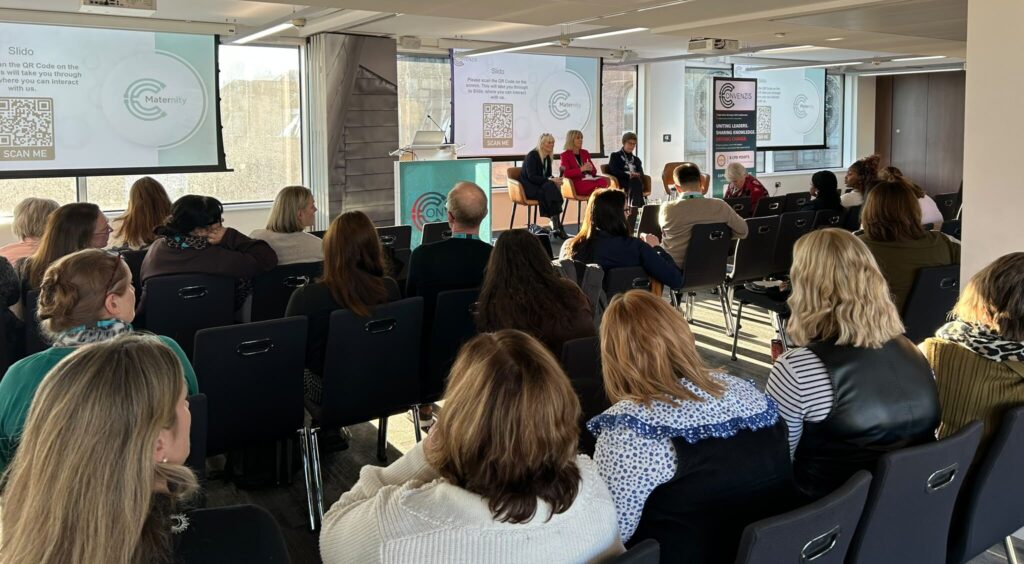
The NHS Neonatal and Maternity Transformation Conference in Manchester brought together maternity and neonatal staff from across the country to share learning, discuss challenges and explore new approaches to improving care for women, babies and families.
Like many conversations across the sector at the moment, there was a strong focus on culture, patient safety and how we create the conditions for sustainable improvement in services that continue to face significant pressures. The conference offered some valuable insights and practical examples of innovation that could help shape future transformation work.
Creating a stronger learning culture
One of the most thought-provoking sessions focused on how organisations can build cultures where staff feel safe to speak up, reflect openly and learn from incidents.
Nazia Fitzpatrick from Mind Strong Hub introduced the CART model, a practical framework designed to support reflective conversations and learning following incidents. The approach supports the Patient Safety Incident Response Framework (PSIRF), encouraging organisations to move beyond blame and towards understanding, improvement and shared learning. As healthcare systems continue to embed PSIRF, tools such as CART and After Action Reviews, offer a useful way of strengthening psychological safety and supporting more impactful team conversations.
The growing role of psychology within maternity services
I had a fascinating conversation with Dr Dorothy Frizelle, Association of Clinical Psychologists’ Director for England, who is involved in national conversations about the potential to embed psychologists directly within maternity multidisciplinary teams. This model is already established in a number of other specialties and there is growing recognition that maternity services could benefit from the same approach.
Bringing psychological expertise closer to frontline care has the potential to strengthen support for women and families experiencing trauma, anxiety, loss or complex emotional needs. It could also provide valuable support for staff working in what can often be highly demanding environments. This aligns closely with wider conversations across the NHS about workforce wellbeing and the importance of providing holistic care throughout pregnancy and the postnatal period.
You can find out more about this topic in Maternity and Neonatal Psychology: New Workforce Guidance from ACP-UK
Improving support following miscarriage
Several sessions focused on improving care and support for women and families affected by miscarriage.
The importance of compassionate communication was highlighted by the Baby Loss Hub in Birmingham, which provides training for healthcare professionals on appropriate language following miscarriage and baby loss. Alongside practical resources and support tools for women and birthing people, the charity aims to equip staff with greater confidence when supporting women during an intensely difficult time.
The South East Genomics team shared findings from a quality improvement project exploring why genomic testing is not routinely accessed following recurrent miscarriage. One of the key challenges identified was a lack of awareness among healthcare professionals about the availability of testing and how to signpost women appropriately. To address this, the team has developed a new information leaflet for patients and has published a report outlining how to improve access.
Leadership matters: lessons from Swansea
One of the most memorable presentations came from Dr Denise Chaffer, alongside Swansea Bay University Health Board Chair Jan Williams and Executive Director of Nursing Elizabeth Rix, who shared lessons from the transformation of maternity services in Swansea after a report highlighted systemic failings.
A particularly interesting aspect of the approach was the decision to distribute accountability for improvement across the executive team. The improvement plan was structured around four themes: patient, family and community engagement; critical safety actions; workforce and education; and governance. Each workstream had an executive director lead, with the Chief Nurse acting as overall Senior Responsible Officer.
The workstreams reported into an executive programme board chaired by the Chief Executive, with further sub-groups focusing on specific areas of improvement, such as triage. This created a clear structure for accountability while ensuring responsibility for improvement was shared across senior leadership, rather than sitting with a single executive sponsor.
Individual executive directors took responsibility for specific transformation workstreams, creating broader ownership and visibility of improvement activity. This was supported by multi-disciplinary team and a data-driven quality improvement approach.
The experience exemplified that while transformational change requires investment, structure and perseverance, it also depends on leaders taking collective responsibility for improvement and creating an environment where staff feel empowered to contribute.
Making quality improvement part of everyday work
Another session that resonated was delivered by Caterina Maniolo, NHS England Quality Improvement Midwife, who challenged attendees to think beyond quality improvement as a series of projects or programmes.
Instead, she encouraged organisations to view quality improvement as a cultural approach that primarily considers relationships, behaviours and power dynamics. Her message was simple but powerful: spend time understanding what is really happening on the shop floor, listen carefully to staff and use data to measure meaningful and sustained improvement. Lasting change depends far more on behaviours and relationships than it does on redesigned pathways or new policies.
Innovation in postpartum haemorrhage management
The conference also showcased emerging innovations in clinical practice. One example was the Jada System, a device now available in the UK that uses vacuum-induced uterine collapse to help control postpartum haemorrhage alongside pharmaceutical interventions.
With postpartum haemorrhage remaining a significant contributor to maternal morbidity, innovations that can support timely treatment are of considerable interest.
Looking ahead
Perhaps the biggest takeaway from the conference was the importance of creating opportunities for meaningful collaboration and shared learning.
Despite the pressures facing maternity and neonatal services, there remains a huge appetite to learn from each other and explore new ways of tackling common challenges. Whether the conversation was about psychological safety, compassionate miscarriage care, leadership accountability or innovation in clinical practice, a common thread emerged: sustainable improvement happens when people are supported to learn, collaborate and lead change together.
For those of us working in transformation, the challenge is not simply to identify good ideas, but to create the conditions that allow them to spread and flourish. By connecting people, sharing what works and supporting organisations to turn learning into action, we have an opportunity to contribute to better experiences and outcomes for women, babies, families and staff alike.
If you are interested in collaborating in this area, then please do get in touch: rf-tr.tphc-communication@nhs.net