
Increasing NHS App logins by 6.5% in targeted primary care networks through a London campaign
Organisation: NHS England London
TPHC’s Communications team supported NHS England London to increase awareness and use of the redesigned NHS App through a coordinated campaign across organic, paid and local channels.
Our approach
In late 2023, the NHS in London identified a need to increase awareness and uptake of the redesigned NHS App and its expanded functionality across the capital. The aim was threefold:
- to raise awareness of the NHS App’s features,
- encourage non-users to download it,
- and support existing users to engage more regularly with its functions, including booking GP appointments, viewing health records and ordering repeat prescriptions
TPHC’s digital and analytics, and communications teams collaborated with London’s integrated care boards (ICBs) and regional communications leads to deliver a phased, multi-channel campaign tailored for both broad and hyperlocal audiences.
The campaign launched in March 2024 with an organic London-wide awareness drive. This was followed by a targeted social media and leaflet distribution campaign in April, specifically focused on two Primary Care Networks (PCNs) in North West London (Harness South and South Southall), identified as having the lowest NHS App uptake. The campaign complemented a simultaneous national NHS App campaign, with London adapting national assets to reflect local needs.
A hybrid approach was taken—combining high-level regional messaging with grassroots communications tactics—to boost visibility and drive user behaviour change across the city.
What was delivered
The campaign was delivered in two key strands:
1. London-wide campaign (March–May 2024):
- A stakeholder toolkit was developed, including FAQs, website copy, bulletin text, social media content and graphics.
- Designed assets were shared with NHS organisations, third sector partners and primary care teams across London.
- A coordinated media release was distributed to ICB communications leads across the capital.
2. Localised NWL campaign (11 April – 8 May 2024):
- A four-week paid social media campaign targeting adults aged 18–64 in NWL ran across Facebook and Instagram. The campaign reached over 355,000 users and generated 8,617 clicks to the NHS App webpage, with a 2.4% click-through rate—well above industry benchmarks.
- Leaflets featuring promotional messaging and a QR code were delivered to households in the Harness South and South Southall PCNs.
- Translated posters and multi-lingual business cards were designed for local GP practices in the top five most spoken languages in these PCNs. Although these materials were distributed after the main campaign period, they supported longer-term engagement efforts.
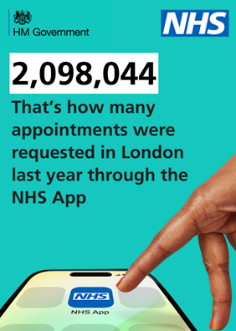
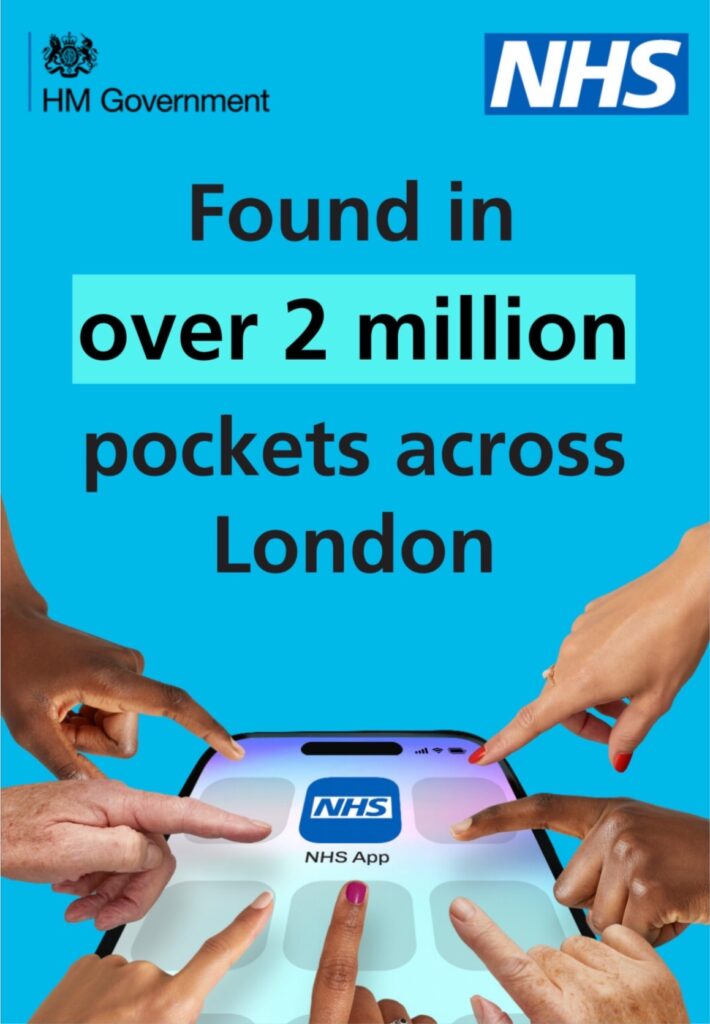
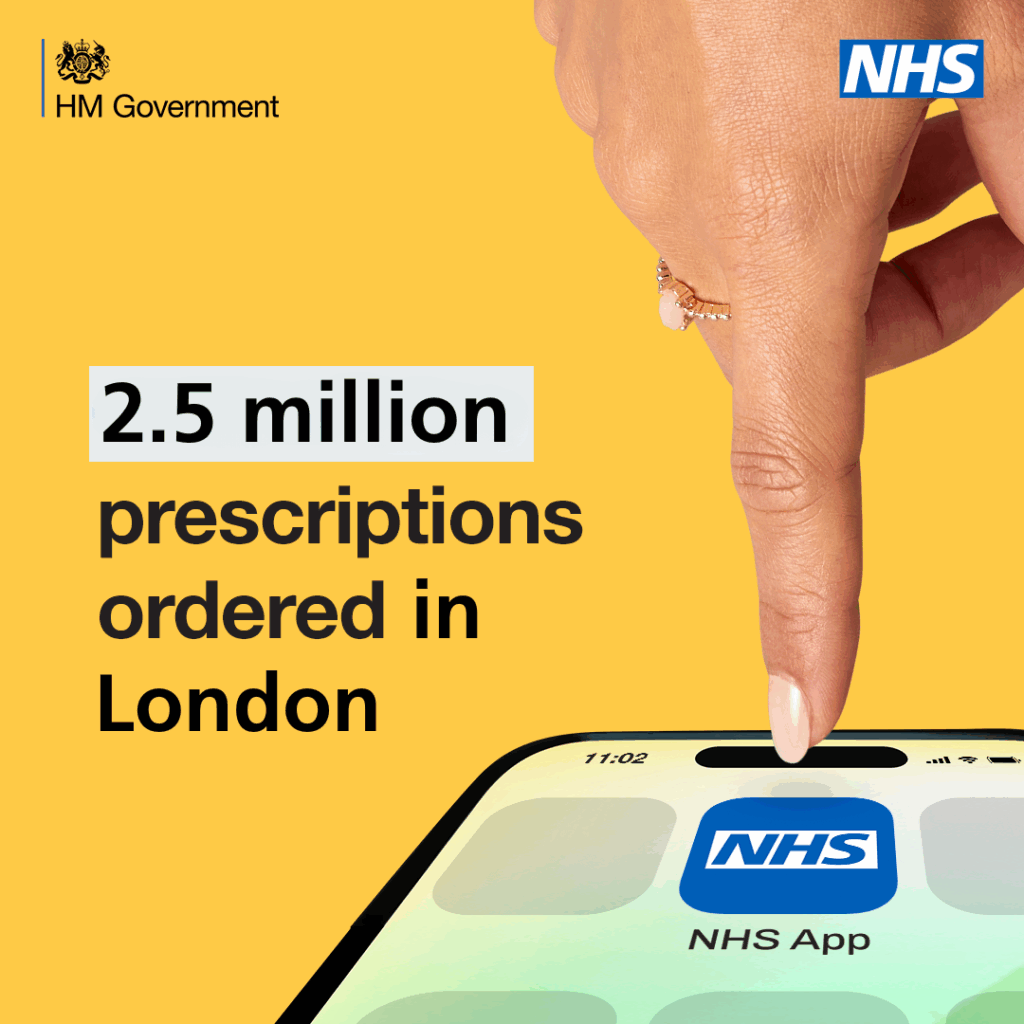
Example assets from the campaign
Governance and co-delivery
The campaign was managed with input from ICB communications leads and stakeholders across the NHS and community organisations to ensure consistency and alignment with both regional priorities and the national NHS App campaign. Clear governance enabled the team to make changes during delivery in response to audience insight and local needs.
Close collaboration with NWL ICB facilitated rapid development of translated assets mid-campaign, ensuring inclusive outreach and representation for diverse communities across the targeted PCNs.
The impact
The London-wide campaign resulted in measurable increases in NHS App engagement:
- London region: 1.7% increase in logins, 7.7% increase in GP medical record views.
- NWL ICB: 3.5% increase in logins, 8.3% increase in record views.
- Targeted PCNs (Harness South & South Southall):
- 6.5% increase in logins
- 9.2% increase in medical record views
As well as achieving these quantifiable increases in usage of the NHS App, the campaign messaging helped to alert people to information and functionality available through the app, helping to make health information accessible to App users who may not have engaged or sought advice for health problems before.
Our learnings and recommendations
To sustain growth in behaviour change campaigns, continued investment in marketing is essential. A multi-channel approach—combining online and offline methods—is recommended to maximise reach, particularly among older individuals and seldom-heard communities.
- Campaign messaging should clearly communicate core benefits succinctly and in plain language.
- For digital efforts, video content is more effective than static formats, and investment in professionally produced videos is advised. Accessibility must be prioritised by making campaign materials available in multiple languages, with translated assets released early to enable robust evaluation.
- A dedicated media spokesperson should be appointed at both regional and ICB levels, supported by existing communications teams and campaign ambassadors. Existing professional networks can also extend campaign reach and support future delivery.
Find out more
Learn more about the NHS App’s current features on the NHS App features and support page.
Ready to start a conversation? Find out more about our communications and engagement services, and explore how we can support your organisation.
Next steps

Communications and engagement case studies
More case studies from our communications and engagement work.

Working with us
Our approach to working with clients, and what you can expect from a relationship with TPHC.

Contact us
Get in touch with our team to discuss your requirements and how we can support you to achieve your goals.