
Resolving a long-standing commissioning challenge for in-prison diagnostics across London
| Outcomes at a glance |
|---|
| • Enabled NHS England London Health & Justice to reach a clear, evidence‑based system decision on re‑establishing in‑prison X‑ray services |
| • Built cross‑system agreement between clinical, operational and commissioning stakeholders on a preferred delivery model |
| • Provided a costed, feasibility-tested model ready for implementation, reducing reliance on prison escorts and addressing variation in waiting times across the estate |
| • Established a model with the potential to act as a foundation for wider inclusion health priorities, including tuberculosis (TB) screening pathways |
The challenge
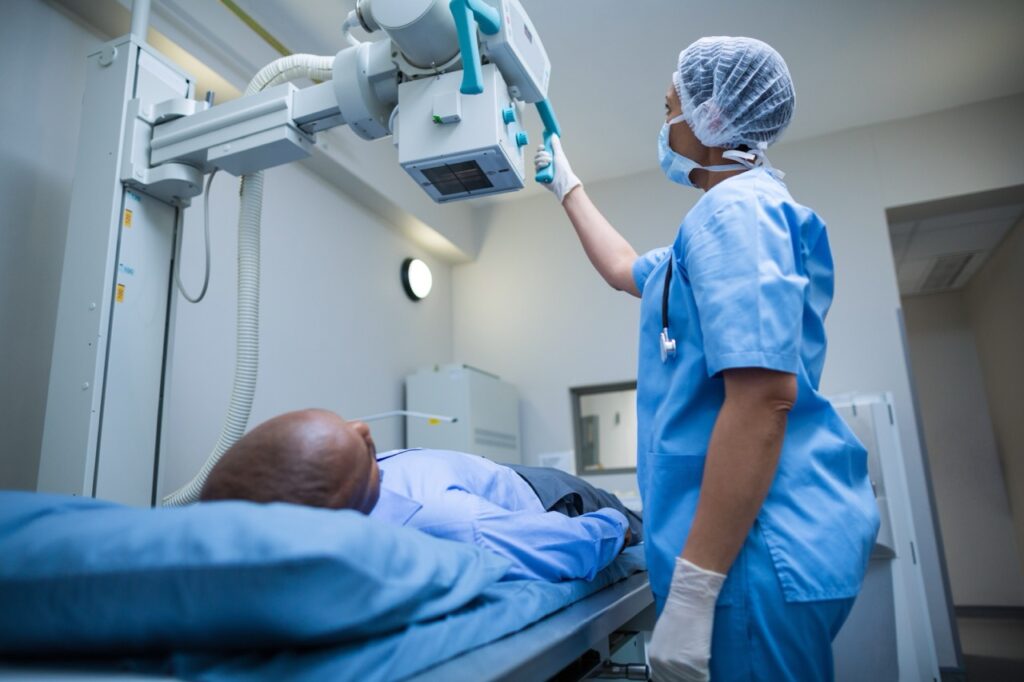
Until September 2022, several London prisons provided in-house X-ray services. When that provision ceased, every patient across the estate requiring an X-ray had to be escorted to an external hospital.
This shift created significant challenges for the system, including:
- Increased demand on prison staff to provide escorts
- Delays in accessing diagnostic services
- Variation in waiting times and access across prisons
- Negative impacts on patient outcomes and equity of care
NHS England London’s Health & Justice team needed a sustainable, system-wide solution, one that could restore access within prisons, command agreement across clinical, operational and commissioning stakeholders, and align with emerging national priorities around tuberculosis (TB) screening and inclusion health.
Our approach
NHS England London Health & Justice commissioned Transformation Partners in Health and Care (TPHC) to lead a comprehensive options appraisal to reach a clear, system-wide decision on how X‑ray services could be safely and effectively re‑established across the London prison estate.
We took an evidence‑led approach by:
- Establishing and chairing a multidisciplinary Task and Finish Group, aligning clinical, operational and commissioning perspectives
- Modelling X‑ray demand using historical activity data to quantify current need and future requirements
- Auditing in‑prison X‑ray equipment and image‑sharing arrangements to assess infrastructure readiness
- Modelling workforce, capacity and equipment costs to test feasibility and affordability
- Engaging with the UK Health Security Agency (UKHSA) to align proposals with emerging TB screening guidance, ensuring the model could serve a wider purpose beyond its immediate diagnostic remit
The impact
Drawing on our analysis, the Task and Finish Group selected a roving radiographer model as the preferred approach for London’s prison estate. The model is designed to:
- Standardise access to X‑ray services across the London prison estate
- Reduce waiting times and reliance on prison escorts for external hospital appointments
- Improve patient access and clinical outcomes
- Deliver value for money at a system level
Selected option
A dedicated radiographer workforce recruited specifically for prison delivery, supported by refurbished or replacement in‑prison X‑ray equipment. Following the review, the Health & Justice team explored how this model could be taken forward, including discussions on its potential to support the development of a London‑wide TB screening pathway.
What our clients say
“Amazing work, a huge thanks to you for pulling this together – on a project that has broken many commissioners!”
Sinéad Dervin, Deputy Director, Health and Justice and Violence Reduction Programme, NHS England London
Ready to start a conversation? If you’re working through a complex commissioning question in Health and Justice, we’d be glad to talk through how we can help. Get in touch with one of our specialists to discuss your challenges.
More about our consulting work


Working with us
Our approach to working with clients, and what you can expect from a relationship with TPHC.

Contact us
Get in touch with our team to discuss your requirements and how we can support you to achieve your goals.