
By Natasha Wainaina, Junior Management Consultant
A reflection on the state of fibroid care in the UK, and the opportunity for healthcare professionals, educators, and system leaders to improve outcomes for women.
Uterine fibroids affect up to 80% of women by the age of 50 (Source: RCOG), with disproportionately higher rates among Black women. Research is also revealing that Black women have a higher prevalence of endometriosis than previously understood. Fibroids drive work absence, social isolation, iron deficiency anaemia, fertility challenges, and significant deterioration in mental health and quality of life. They are implicated in adverse pregnancy outcomes and contribute to deepening health inequalities.
The clinical and policy community has become increasingly aware of this. Recent years have seen a growing momentum through the Women’s Health Strategy, Women’s Health Hubs, and the voices of patient advocates who have worked hard to bring fibroids into the national conversation. The question now is how to convert that momentum into consistent, equitable care for every person that needs it.
What women with fibroids tell us
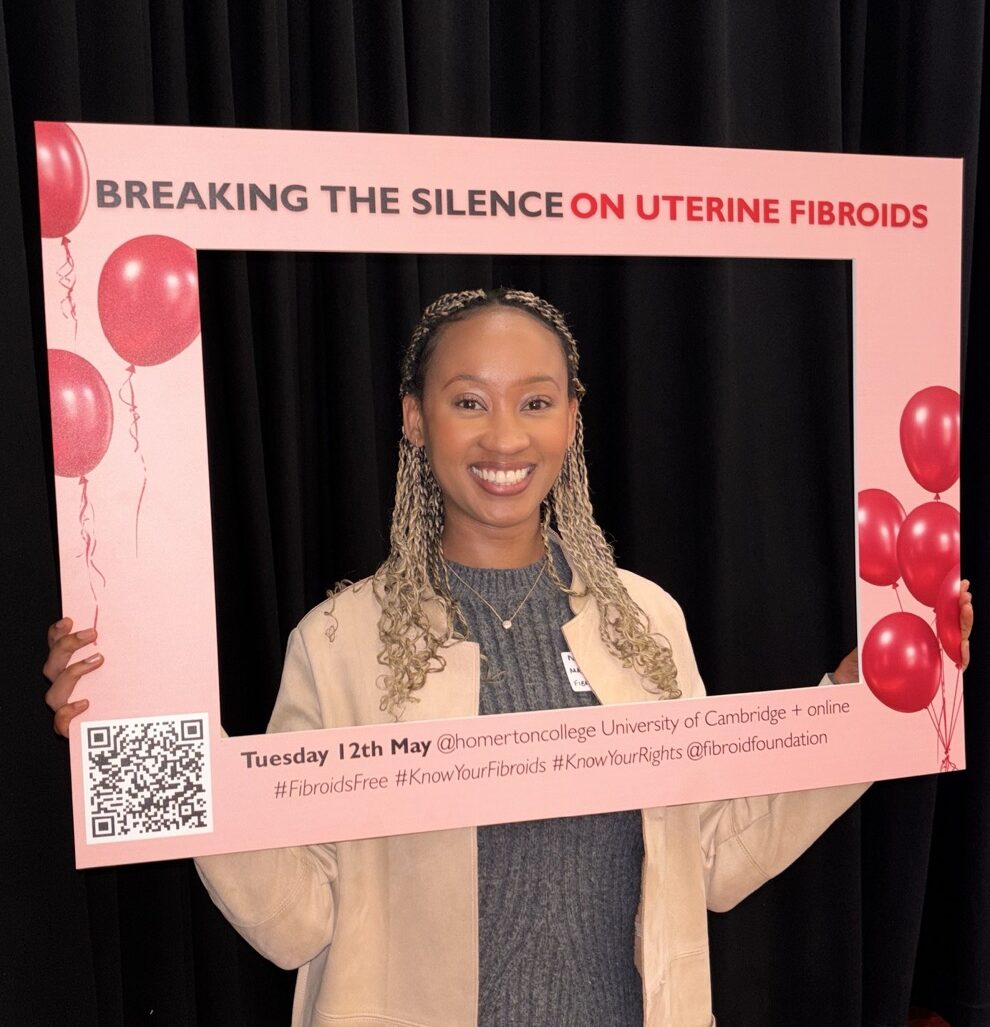
At a recent event, women living with fibroids described feeling dismissed and the challenges faced with accessing a full range of treatments, clearer information about screening, and more focus on prevention. Practitioners also reflected honestly on the constraints they work within:
- Limited time
- Stretched resources
- And gaps in training that make it harder to respond as well as they would like.
These are shared challenges. Part of the reason is also structural, as researchers tend to investigate conditions they identify with. Fibroid research has been underfunded because it has not always had the visibility it deserves, which, unfortunately, leaves the knowledge gap and the funding gap in a self-reinforcing cycle.
What the bigger picture requires
A consistent message has emerged from recent conversations: a whole-person approach matters. The diagnosis must involve physical health, mental health, fertility, nutrition, cultural identity, and socioeconomic circumstances. For many, their clinical appointment is the first time someone in a position of authority has taken their symptoms seriously.
Two people can lose the same volume of blood each month and have entirely different experiences of it. Asking not just what is happening physically, but whether it is stopping an individual from getting on with their life, changes the quality of that conversation. Women, particularly women from the global majority, often normalise severe pain and emotional distress. Creating conditions for them to be heard is where the system can make the most immediate difference.
Education, research, and the gaps we must close
Training in women’s health has roughly halved over the years, and women’s health is, alarmingly, not mandatory. There is currently no specific NICE guideline for the clinical management of fibroids. The Royal College of Obstetricians and Gynaecologists (RCOG) has been called upon to develop a standardised diagnostic and treatment pathway. That pathway is the infrastructure that enables every healthcare professional to give consistent, evidence-based, equitable care.
On research. Some women are more likely to develop fibroids due to their genetics, though environment and diet play a role too. Environmental factors, including endocrine disruptors, are under-researched, and closing that gap matters for prevention as much as treatment. Global funding for fibroid research needs to match the scale of the problem. The James Lind Alliance process, which identifies top research priorities, is one mechanism worth engaging. When fibroids are part of the conversation, they attract dedicated resource. Getting them there is within reach.
Where the system can go further
The Refreshed Women’s Health Strategy now has three shifts:
- From hospital to community
- From analogue to digital
- From treatment to prevention
Giving commissioners and system leaders a clear direction of travel. Women’s Health Hubs are already demonstrating what is possible with shorter waiting times for hysteroscopies, community-based fibroid care, and lifestyle support integrated in clinical pathways. The infrastructure exists and works. The task is implementing it nationwide.
Every healthcare professional outside of obstetrics and gynaecology could include a menstrual health question as part of their standard assessment. Routine, not optional, in the same way clinicians ask about allergies. The follow-up matters as much as the opening question: does it stop you getting on with your life? For diagnostic procedures and blood tests, questions about menstrual cycle, heavy bleeding, and menopausal status should be standard.
Alongside that, appointment times need to be sufficient for patients to be heard. And primary care awareness must be paired with accessible services to refer into.
One of the biggest drivers of change in fibroid care has so far been patient advocacy. Women who started peer support groups, who built online communities of 1000+ members such as @lifewithfibi on TikTok and @guidanceuite on Instagram, who became councillors to give their voices institutional weight. They have done extraordinary work.
Professor Dame Lesley Regan’s point is worth holding onto: “Closing the gender health gap means addressing the gaps among and within women, shaped by race, geography, access, and whether the clinician they see was ever taught to listen.”
About the author
Natasha is a subject matter expert in women’s health, drawing on the organisation’s experience in maternity transformation, pathway redesign, and health equity. She is also a recognised advocate in the women’s health space, working to raise awareness of how to navigate the healthcare system and empower women to advocate for themselves. For more information on Natasha’s work, visit: linkedin.com/in/natashawainaina.
How TPHC can support your system
We work across the healthcare system, including with providers and Integrated Care Boards on pathway redesign, workforce development, and health equity. Our maternity and neonatal health equity work in north central London, in partnership with the NHS Race and Health Observatory, gives us direct experience of transforming services that reach the women and pregnant people who need them most. We are applying that experience to women’s health more broadly.
If you would like to find out more about our work, discuss how we can support your system, or connect with us on women’s health, we would welcome the conversation.
Contact us at: rf-tr.tphc-communication@nhs.net.