
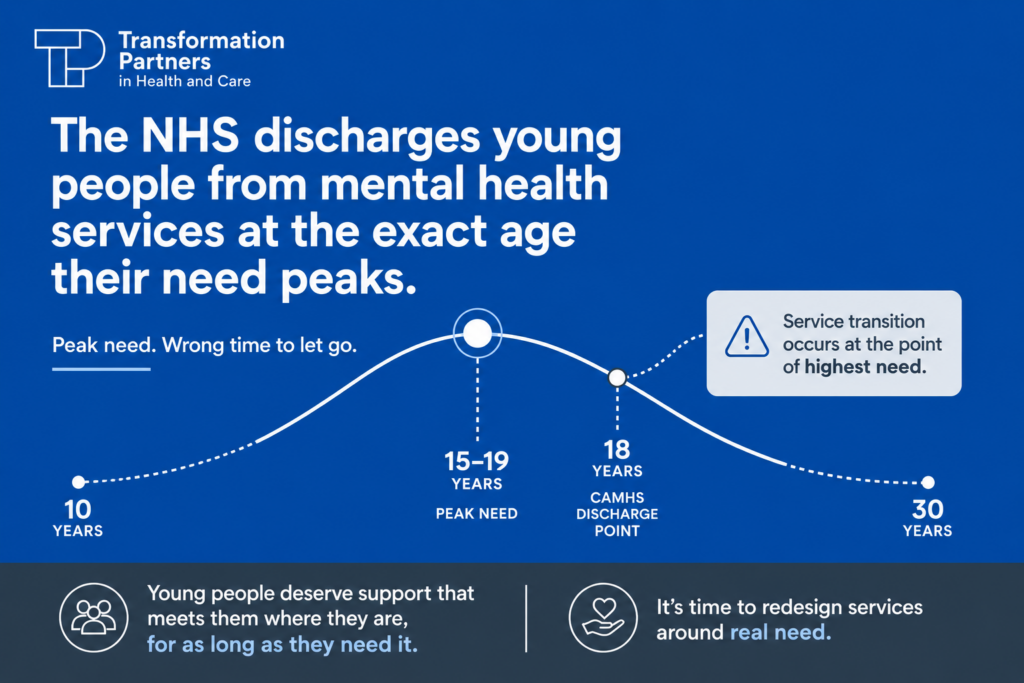
A new Lancet study published last month confirms what many in the NHS have suspected: the peak of mental health burden has shifted. In 1990, mental disorders ranked 12th among leading causes of disease burden globally. By 2023, they had risen to 5th. And for the first time, the hardest-hit age group is 15 to 19-year-olds.
For those of us working in health and care planning, the UK data makes it harder to look away from. The Adult Psychiatric Morbidity Survey 2023/4, published by NHS England in June 2025, shows the same pattern here. A quarter of 16 to 24-year-olds now have a common mental health condition, up from 18.9% in 2014. The burden is consistently higher in women than men, and the 16-24 age group has seen both the highest rates and the steepest increase of any age group.
Among 15 to 19-year-olds globally, the study finds anxiety is the biggest driver of lost healthy years, followed by major depressive disorder, conduct disorder, and autism spectrum disorders. That last point matters for service design. Many young people presenting with ASD or learning disabilities also carry a co-occurring mental health need, and the systems designed to support them often treat those needs separately.
The commissioning question this raises is specific. CAMHS services discharge young people at 18, which, according to this data, is precisely the point of peak need. Most ICB planning metrics still use whole-population averages that can mask this youth concentration entirely. The national direction of travel towards 0-25 models exists for a reason, but service structures haven’t caught up.
The Mental Health Act 2025, which received Royal Assent in December 2025, adds another layer of urgency. Autism and learning disability alone are no longer grounds for detention under Section 3, and ICBs now have a statutory duty to maintain dynamic support registers for people with learning disabilities and autism at risk of detention, with a requirement to have regard to those registers when making commissioning decisions. For the 15-24 age group, where neurodevelopmental conditions and mental health needs increasingly overlap, that makes pathway redesign an immediate planning priority.
About TPHC
TPHC partners with health and care systems across NHSE national and regional teams, ICBs and trusts to deliver complex transformation programmes spanning all‑age mental health, learning disabilities and neurodevelopmental pathways, including CAMHS and ADHD age-based transitions. With our NHS values at the core, we also lead impactful work that helps systems redesign services around real need and demand, enabled by digital optimisation and a thriving workforce. If you’re looking to move towards more sustainable, innovative models of care, we’d welcome a conversation.